
Lonely Planet: Destination Hubs
Info
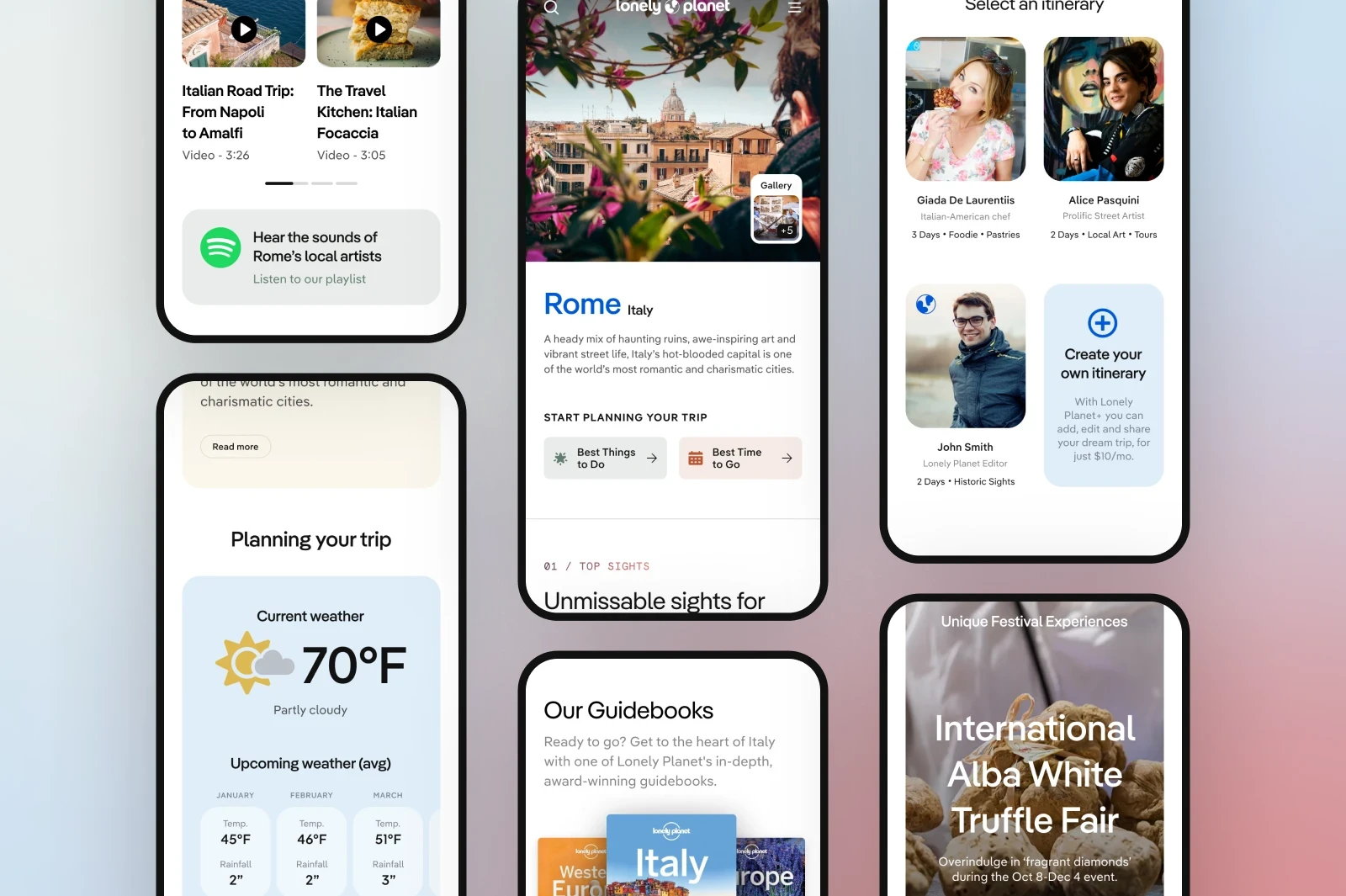
The Destination hub is a scalable template that serves as the backbone of the entire Lonely Planet site. It covers 5,000 cities, countries and continents and offers content that is authentic and "un-googleable" information that travelers need when they start planning their dream trip.
Year
Mar 2023
Client
Lonely Planet
Services
Web, Editorial
Problem statement
The trip planning process can be difficult. It requires opening multiple browser tabs and scouring the internet for information that is relevant and authentic. The previous version of the Destination Hub depriorizted planning-based content, didn't have modular components that could change based on the content available on the hub, and ultimately wasn't mobile first.
The trip planning process can be difficult. It requires opening multiple browser tabs and scouring the internet for information that is relevant and authentic. The previous version of the Destination Hub depriorizted planning-based content, didn't have modular components that could change based on the content available on the hub, and ultimately wasn't mobile first.
Design process
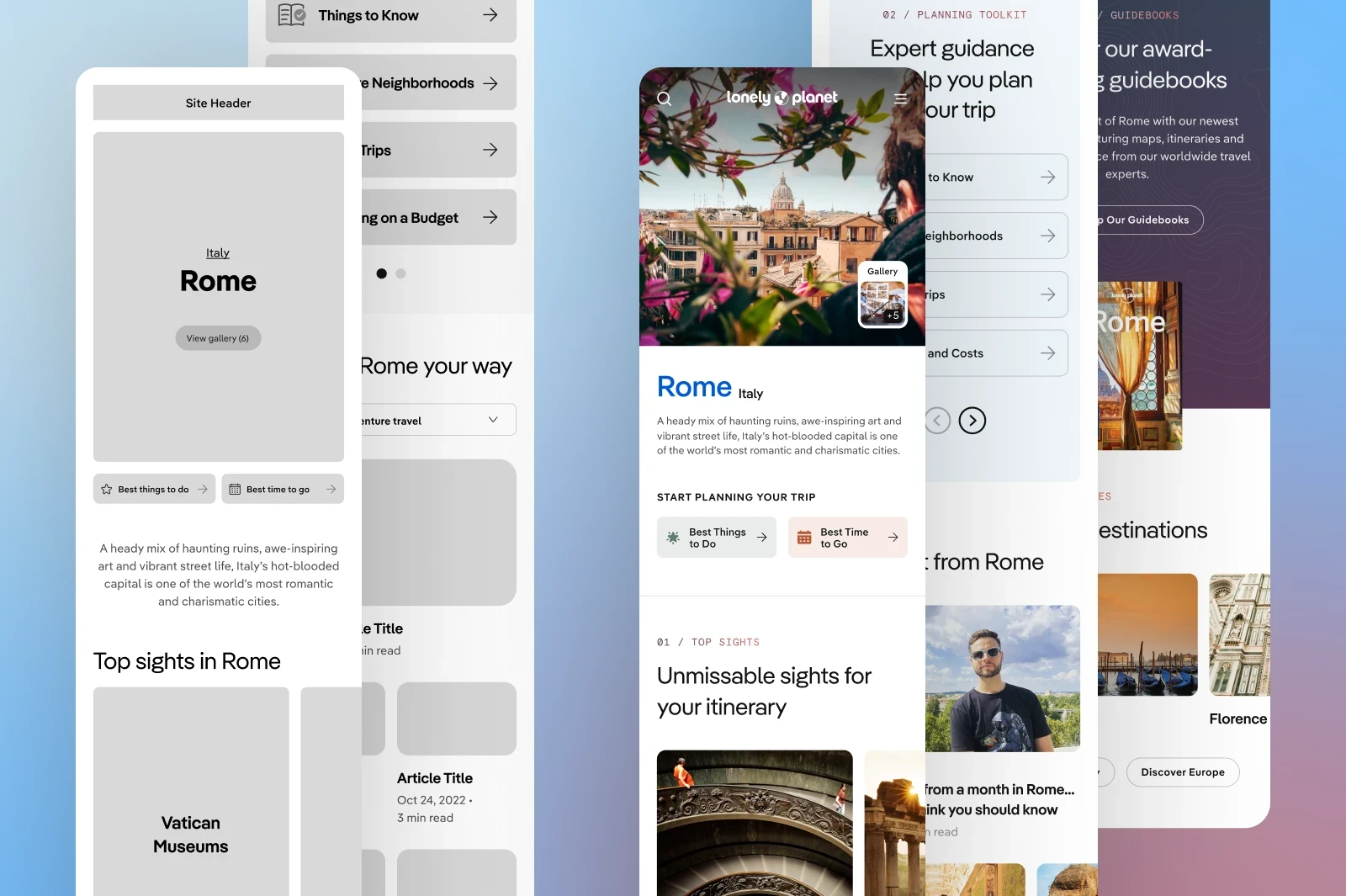
When redesigning a content hub page, I followed a concise and effective design process. I began by interviewing key stakeholders to gather requirements. Next, I organized and led brainstorming sessions to generate ideas. We then aligned on the project scope and set milestones. To ensure everyone was on board, I created wireframes (below) that were approved by both the business and tech teams. Additionally, I conducted thorough competitive analysis, both direct and indirect, to gather insights. Armed with this information, I designed multiple concepts for the page. Finally, I conducted internal usability testing to ensure a seamless user experience. This led to a beautiful site experience that married Business, Editorial and user goals. Once the project launched, we found that users were engaging with our planning-based content which was our primary goal of the redesign.
When redesigning a content hub page, I followed a concise and effective design process. I began by interviewing key stakeholders to gather requirements. Next, I organized and led brainstorming sessions to generate ideas. We then aligned on the project scope and set milestones. To ensure everyone was on board, I created wireframes (below) that were approved by both the business and tech teams. Additionally, I conducted thorough competitive analysis, both direct and indirect, to gather insights. Armed with this information, I designed multiple concepts for the page. Finally, I conducted internal usability testing to ensure a seamless user experience. This led to a beautiful site experience that married Business, Editorial and user goals. Once the project launched, we found that users were engaging with our planning-based content which was our primary goal of the redesign.
Personalization concept
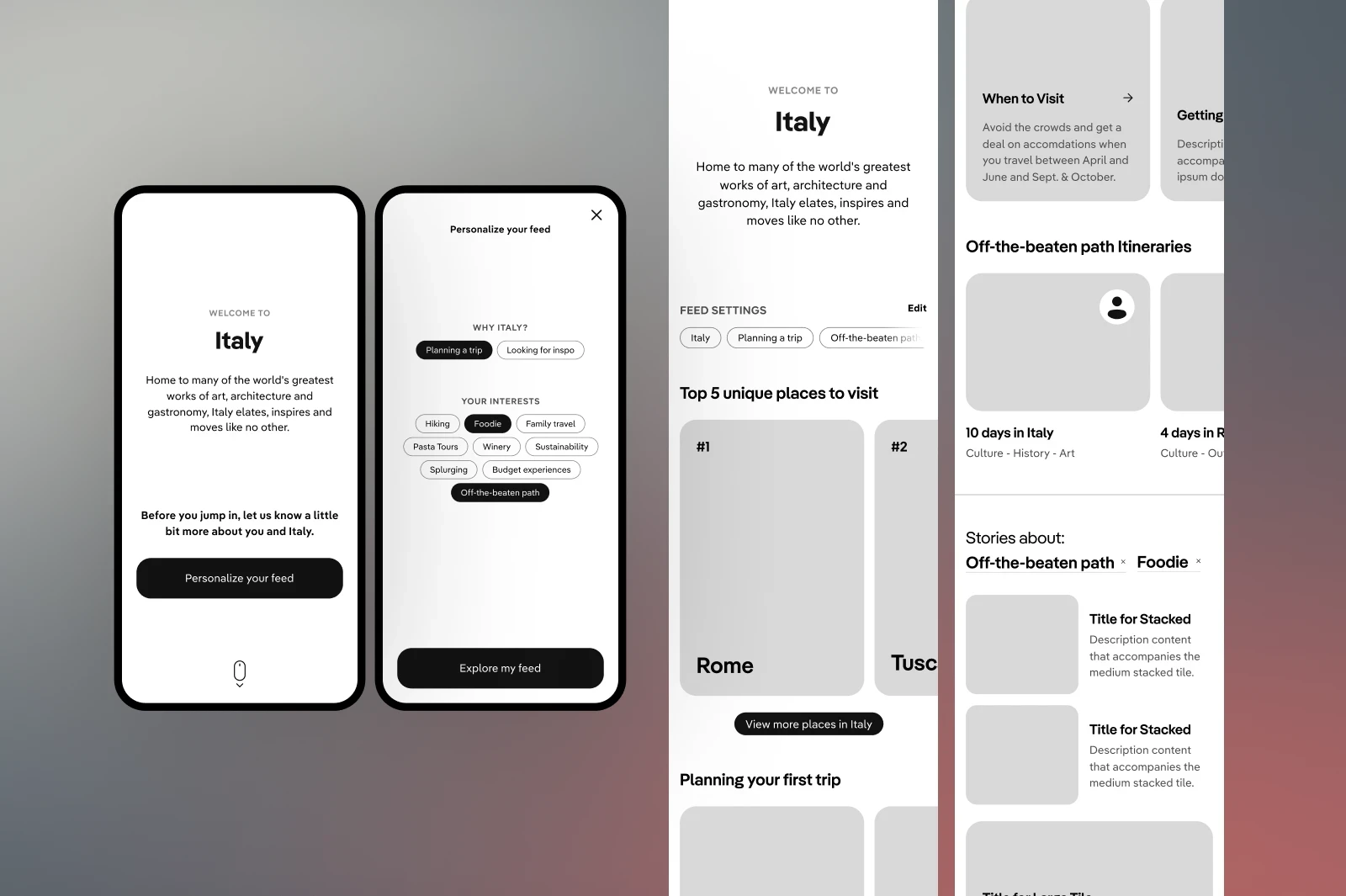
Once the redesigned page template was launched, our team continued it ideate around adding personalization elements throughout the page. We knew through ongoing UX Research that no two travelers are the same and personalization was something they were heavily looking. We created a prototype that asked a user to indicate why they on that Destination Hub and what were their interests (which would change based on the type of Destination). From those selections, the Destination Hub would adjust content based on the intent and interest of the traveler. The concept tested well and paved the way for future personalization projects.
Once the redesigned page template was launched, our team continued it ideate around adding personalization elements throughout the page. We knew through ongoing UX Research that no two travelers are the same and personalization was something they were heavily looking. We created a prototype that asked a user to indicate why they on that Destination Hub and what were their interests (which would change based on the type of Destination). From those selections, the Destination Hub would adjust content based on the intent and interest of the traveler. The concept tested well and paved the way for future personalization projects.
The conclusion
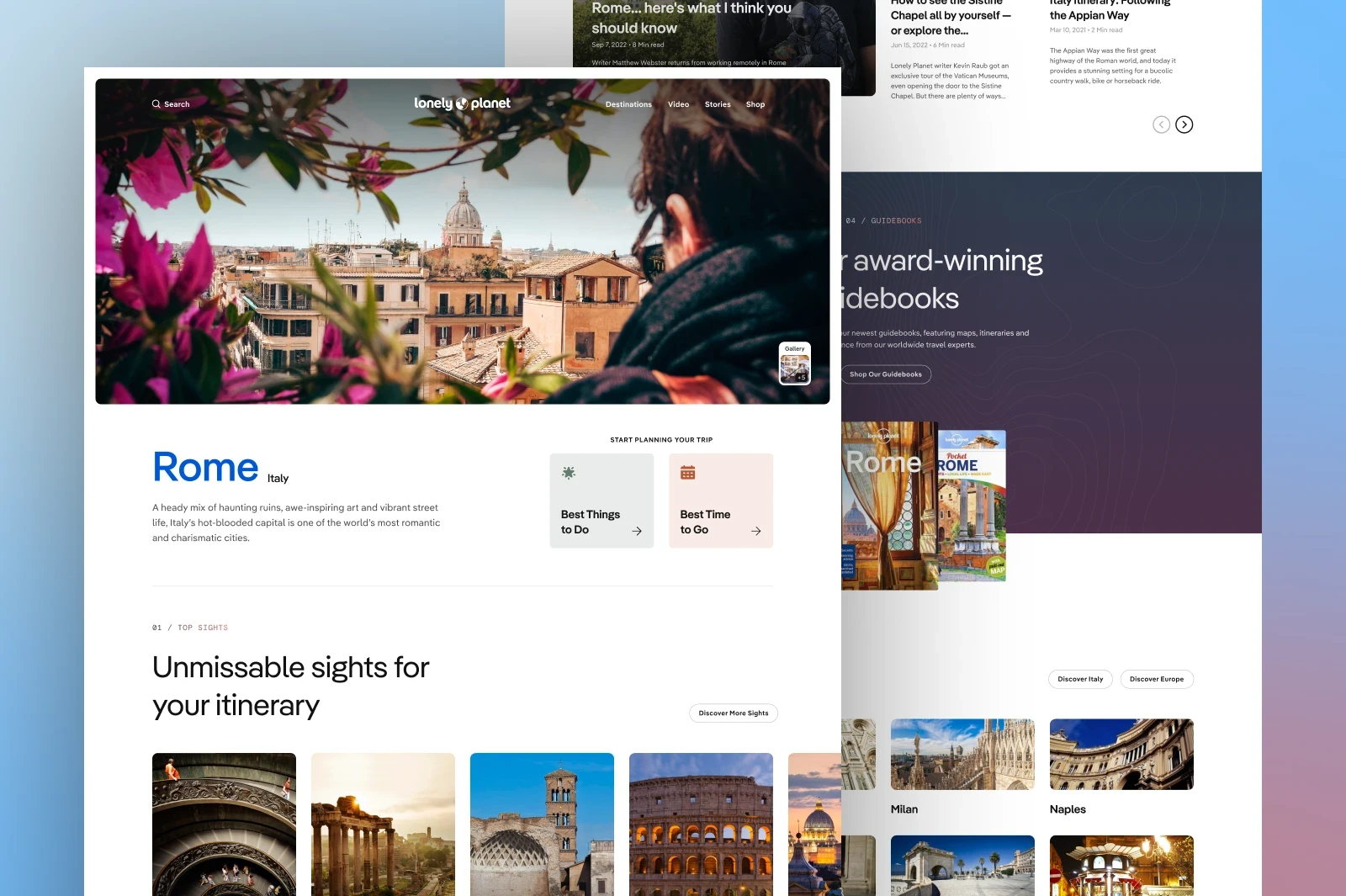
The new Destination Hub was a huge success for our team. We increased our pages per session, scroll depth and time on site. While also decreasing our bounce rate. Additionally, our planning-based content was interacted with 10% more than the control. Because of this, the team continued to iterate and build off the first phase and continues to find ways to improve the design.
The new Destination Hub was a huge success for our team. We increased our pages per session, scroll depth and time on site. While also decreasing our bounce rate. Additionally, our planning-based content was interacted with 10% more than the control. Because of this, the team continued to iterate and build off the first phase and continues to find ways to improve the design.

Connor McNulty
Content Design
Dustin’s able to think strategically, synthesize complex data, and make informed design decisions. All of that would be amazing on its own, but what sets him apart as a designer is that he’s an awesome collaborator. I say this as a content designer who had the pleasure of collaborating with him. He drives people around him to think harder about a problem, to ask insightful questions, and to have a good time while doing it—inevitably leading to data-driven, human-centered design solutions.
Connor McNulty
Content Design
Dustin’s able to think strategically, synthesize complex data, and make informed design decisions. All of that would be amazing on its own, but what sets him apart as a designer is that he’s an awesome collaborator. I say this as a content designer who had the pleasure of collaborating with him. He drives people around him to think harder about a problem, to ask insightful questions, and to have a good time while doing it—inevitably leading to data-driven, human-centered design solutions.

